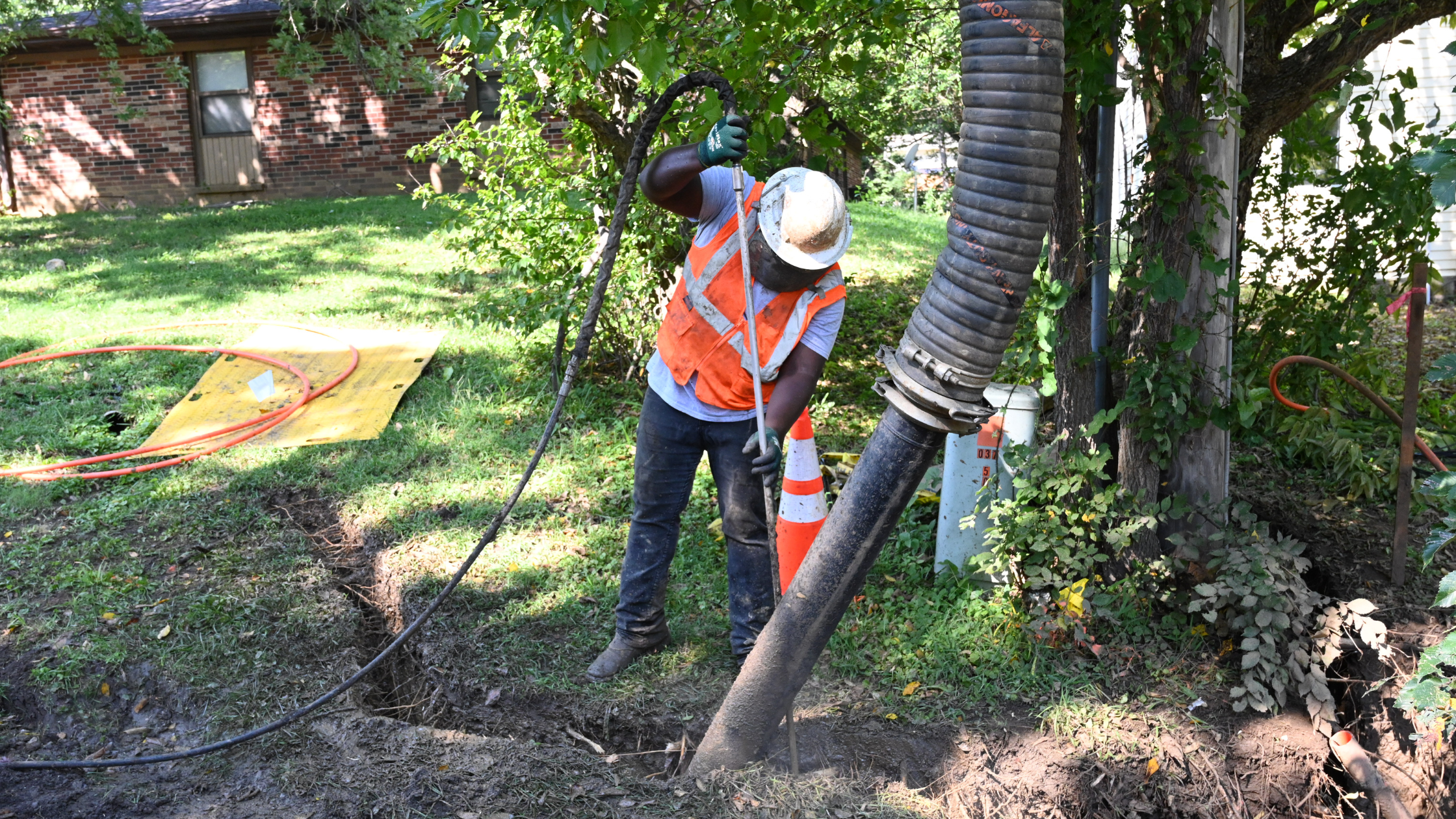
Underground construction rarely begins with a completely blank site. Communications lines, electric facilities, gas lines, water mains, sewer systems, and other infrastructure may already share the same corridor.
Records and surface markings help crews understand what may be underground, but they do not always answer every field-level question. Before excavation, drilling, or installation moves forward, a crew may need to confirm where an existing utility is located at a particular point.
That is one situation where hydro excavation may be used.
Hydro excavation is a controlled excavation method that uses pressurized water to loosen soil and vacuum equipment to remove the resulting slurry. The material is collected in a debris tank rather than being left around the opening.
Unlike a backhoe or excavator bucket, hydro excavation does not rely on metal teeth to mechanically remove soil from immediately around a utility. This can help crews expose existing infrastructure while reducing direct mechanical contact with it.
However, hydro excavation is not automatically the right method for every site. The decision depends on the work being performed, known and suspected utilities, soil conditions, access, weather, applicable requirements, and the project plan.
How Does Hydro Excavation Work?
A typical hydro excavation process begins before water reaches the ground. Crews first review the available project information, locate responses, surface markings, plans, site conditions, and the specific purpose of the excavation.
Once the work area has been evaluated, pressurized water is directed into a controlled area to break apart the soil. A vacuum hose removes the loosened soil and water, transferring the material into the equipment’s debris tank.
The result is usually a focused opening that allows crews to see what is below the surface.
Equipment is only one part of that process. Pressure, nozzle selection, distance from the facility, soil behavior, site access, and operating technique all require consideration. Crews must also follow applicable laws, project requirements, facility-owner instructions, and established safety procedures.
Hydro excavation should therefore be viewed as a field method supported by planning and trained judgment, not as a substitute for them.
Hydro Excavation, Potholing, and Daylighting
Two terms commonly associated with hydro excavation for utilities are potholing and daylighting.
Potholing generally refers to creating a small test hole to determine the position of an underground facility at a specific point. Daylighting refers more broadly to safely exposing a facility so it can be visually observed.
These practices can help confirm:
- The horizontal position of a utility at the point of exposure
- Its approximate depth at that location
- The type or configuration of the exposed facility
- Whether field conditions align with available plans and markings
- Whether a planned excavation or bore may conflict with existing infrastructure
This information can be especially important when a proposed broadband route crosses an existing utility or when several facilities occupy a narrow right-of-way.
A pothole does not map an entire utility line or guarantee conditions elsewhere along the route. It provides verified information at the point that was physically exposed. Crews must use that information alongside other project records, markings, observations, and required damage-prevention practices.
Why Isn’t a Utility Marking Enough?
Utility markings are an essential part of excavation planning, but a painted line or flag should not be interpreted as a complete picture of what is underground.
A marking generally communicates the approximate horizontal location of a facility. It may not confirm the facility’s exact depth. Records can also be incomplete, and field changes may not always match what appears on an older plan.
Physical exposure allows crews to compare the expected conditions with what is actually present underground.
For example, if a planned bore must cross an existing facility, potholing may help the field team verify its position before proceeding. If the exposed utility is shallower, deeper, or positioned differently than expected, the crew can evaluate the next step using better information.
This is one reason hydro excavation is connected to more than the excavation itself. It supports communication among locators, project managers, engineers, facility owners, and field crews.
Federal damage-prevention guidance recognizes potholing and soft excavation methods, including vacuum and hydro excavation, as tools that can help improve damage-prevention practices. The Federal Highway Administration also identifies vacuum excavation as one of the technologies used in subsurface utility engineering. However, no single method removes every source of risk. PHMSA and FHWA
When May Hydro Excavation Be Used?
Vac services for utility construction can support several types of field work. Depending on the project, hydro excavation may be used to:
- Pothole a marked utility before excavation or drilling
- Verify utilities at planned bore crossings
- Expose infrastructure ahead of a repair or connection
- Investigate an area where records and field conditions do not agree
- Support work in congested utility corridors
- Create controlled access around existing facilities
- Gather verified field information for design or as-built documentation
Hydro excavation may also be useful when the project requires a relatively focused opening rather than a larger mechanically excavated area.
That does not mean mechanical excavation is unnecessary. On many projects, different methods serve different purposes. Hydro excavation may be used for verification or work near an existing facility, while mechanical equipment handles larger-volume excavation where conditions and project requirements allow.
Why Field Conditions Still Matter
Hydro excavation has clear applications, but the method must fit the site.
Soil type affects how material responds to water and vacuum. Frozen or heavily compacted ground may require different planning than loose soil. Crews must consider equipment access, nearby traffic, water availability, debris capacity, disposal requirements, weather, and the size and depth of the proposed excavation.
Site-specific requirements may also limit how equipment can be positioned or operated. In some cases, another excavation method, or a combination of methods, may be more appropriate.
The right question is not simply, “Can hydro excavation be used?” It is, “What method best fits the work, the conditions, and the risks present at this location?”
Better Visibility Supports Better Decisions
Hydro excavation gives utility-construction teams a way to carefully expose what cannot be fully evaluated from the surface. Its value is not limited to creating a hole. It helps replace an assumption with verified field information at a specific point.
That information can support safer planning, clearer communication, and better decisions before the next phase of work begins.
At Sellenriek Construction, vac services are part of a broader commitment to reliable execution, transparent communication, and a safety-first approach. When underground conditions require confirmation, choosing the right excavation method is an important part of keeping the work moving responsibly.
Is hydro excavation the same as vacuum excavation?
Hydro excavation is a type of vacuum excavation. It uses pressurized water to loosen soil and a vacuum system to remove the material. Air excavation uses compressed air instead of water. The appropriate method depends on the site, soil, project requirements, and intended use.
What is utility potholing?
Utility potholing is the process of creating a focused test hole to physically expose an underground facility. It helps crews verify the utility’s location and depth at that specific point before nearby excavation, drilling, or installation begins.
Does hydro excavation eliminate the risk of utility damage?
No excavation method eliminates every risk. Hydro excavation can reduce direct mechanical contact with underground facilities, but it must still be supported by proper locating, planning, trained operation, communication, and compliance with applicable requirements.
Why can underground utility locations differ from project records?
Records may be incomplete, generalized, outdated, or based on planned rather than verified installation information. Previous field changes, abandoned infrastructure, and undocumented repairs can also create differences between records and actual conditions.
When should utilities be verified before directional drilling?
Verification may be needed where a planned bore crosses or approaches existing infrastructure, where facilities are congested, or where field conditions do not align with available records and markings. The specific requirements depend on applicable laws, facility-owner requirements, and the project plan.
How can verified utility information support future projects?
When physical exposure is properly documented, the resulting information may improve design decisions, construction planning, as-built records, GIS data, future maintenance, and coordination among project stakeholders.