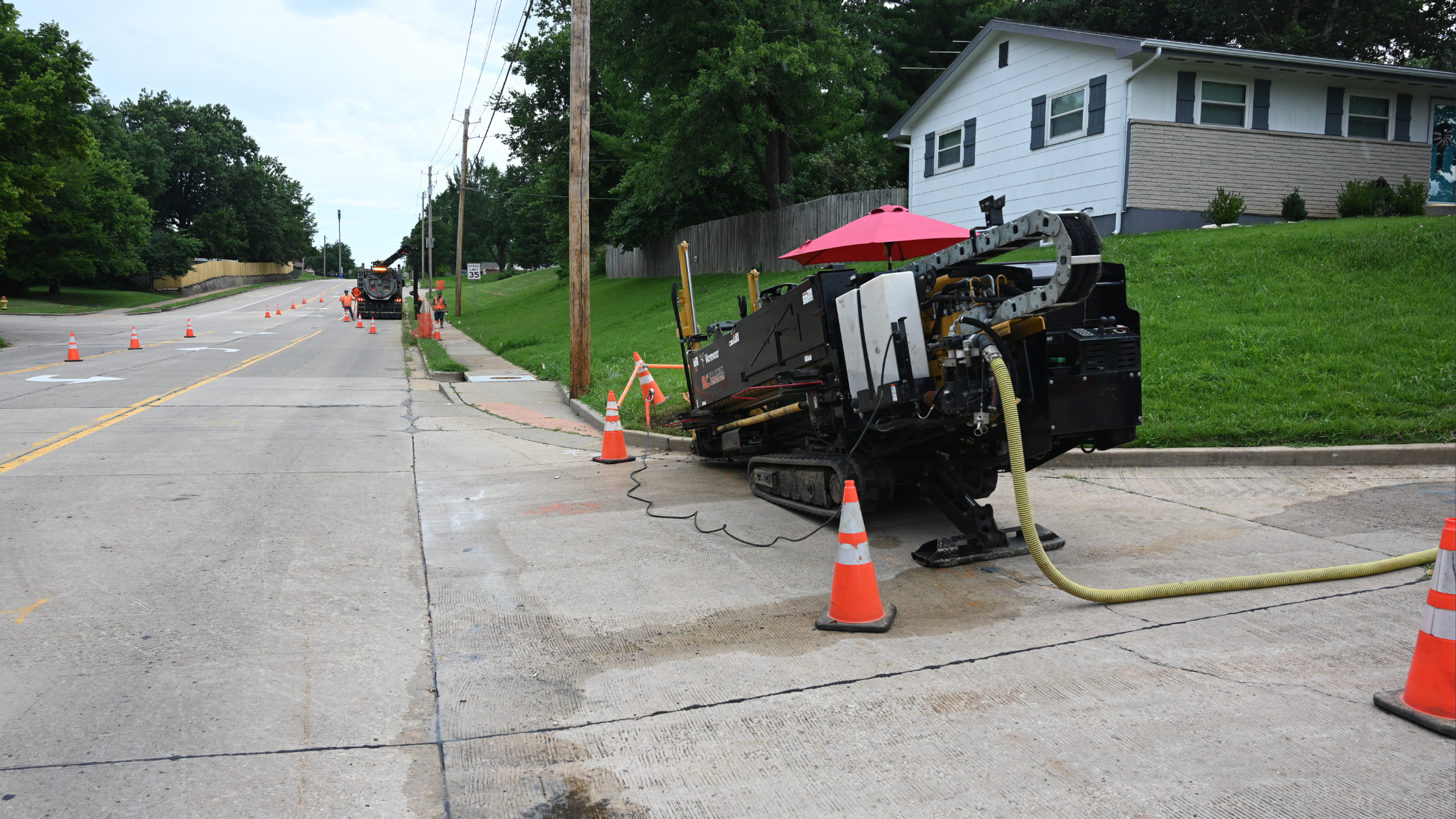
Utility construction does not always happen behind a fence or far from everyday activity. Broadband and other underground utility projects frequently move through neighborhoods, along busy roads, near local businesses, and across public rights-of-way.
In these environments, crews may be working only a short distance from passing vehicles, pedestrians, residents, customers, and other contractors. Existing infrastructure must remain protected while the surrounding community continues moving through its normal routines.
That makes safety about more than protecting the people performing the work. It also means protecting the public, limiting avoidable disruption, and maintaining confidence in the organizations responsible for the project.
Effective utility construction safety is not a single procedure or checkpoint. It is a daily operational discipline built into how a project is planned, communicated, organized, and executed.
Why Public-Facing Utility Work Adds Complexity
Every construction site requires attention and care, but a public-facing work environment introduces conditions that can change throughout the day.
Traffic patterns may shift as commuters, school buses, delivery vehicles, and emergency services move through the area. Pedestrians may approach a work zone without understanding where active operations are taking place. Residents and business owners may have questions about access, schedules, restoration, or what crews are doing near their property.
At the same time, crews may be working within a limited footprint around active infrastructure. Existing utilities, roads, easements, landscaping, driveways, and other nearby improvements all influence how the work must be completed.
Some of the factors crews and project leaders must remain aware of include:
- Moving vehicle traffic
- Pedestrian access
- Nearby homes and businesses
- Existing underground and aboveground infrastructure
- Limited room for equipment and materials
- Changing site or ground conditions
- Public questions and concerns
- Access to properties, roads, or shared spaces
- Expectations for cleanup and restoration
These conditions make awareness especially important. A work area that was controlled earlier in the day may change when traffic increases, deliveries arrive, weather shifts, or members of the public enter the area.
For municipalities, ISPs, and utility owners, that complexity also creates a public-facing responsibility. Community members may not know which company employs the crew or manages a particular part of the project. They are more likely to associate what they see in the field with the utility provider, municipality, or organization whose name is connected to the work.
Safety Starts Before Crews Arrive
The visible part of public safety in construction begins when crews and equipment arrive, but the work required to support a safe operation starts earlier.
Planning helps teams understand where the work will take place, what known risks are present, and how the surrounding environment could affect execution. That preparation may include reviewing the scope, available site information, existing infrastructure, equipment needs, access constraints, and other conditions that crews are likely to encounter.
The goal is not to assume every field condition can be predicted. Utility construction rarely offers that level of certainty. Instead, planning gives crews the context they need to recognize when actual conditions differ from what was expected.
Before work begins, important questions may include:
- Where will crews and equipment be positioned?
- How much room is available within the work zone?
- What existing utilities or infrastructure are known to be nearby?
- How could traffic or pedestrian activity affect the operation?
- Will surrounding properties or businesses need continued access?
- What equipment is appropriate for the site conditions?
- What information does the field team need before starting?
- Who should be contacted if conditions change?
This preparation connects planning with field execution. When crews understand both the scope and the surrounding environment, they are better positioned to make informed decisions once work begins.
Crew Awareness During Active Work
Once a job is active, conditions must be continually observed rather than treated as fixed.
Crews working near roads, neighborhoods, or public spaces need to remain aware of more than the task immediately in front of them. Vehicles may enter the area unexpectedly. Pedestrians may approach equipment or attempt to move through the work zone. A resident may need access to a driveway. An unanticipated utility conflict or ground condition may require the team to pause and reassess its approach.
Strong right-of-way construction safety depends on communication between the people performing the work. If a condition changes, the team needs a clear way to share that information and adjust.
Organization also matters. Equipment, materials, and tools should support the work without creating unnecessary confusion around an already constrained area. A well-managed site helps crews see what is happening around them and makes the work zone easier for the public to understand.
That awareness includes knowing when to stop.
Unexpected conditions should not be treated as inconveniences to push through. They are signals that the original plan may need to be reviewed. Pausing to communicate, confirm information, or change the approach can help prevent a small uncertainty from becoming a larger safety or quality issue.
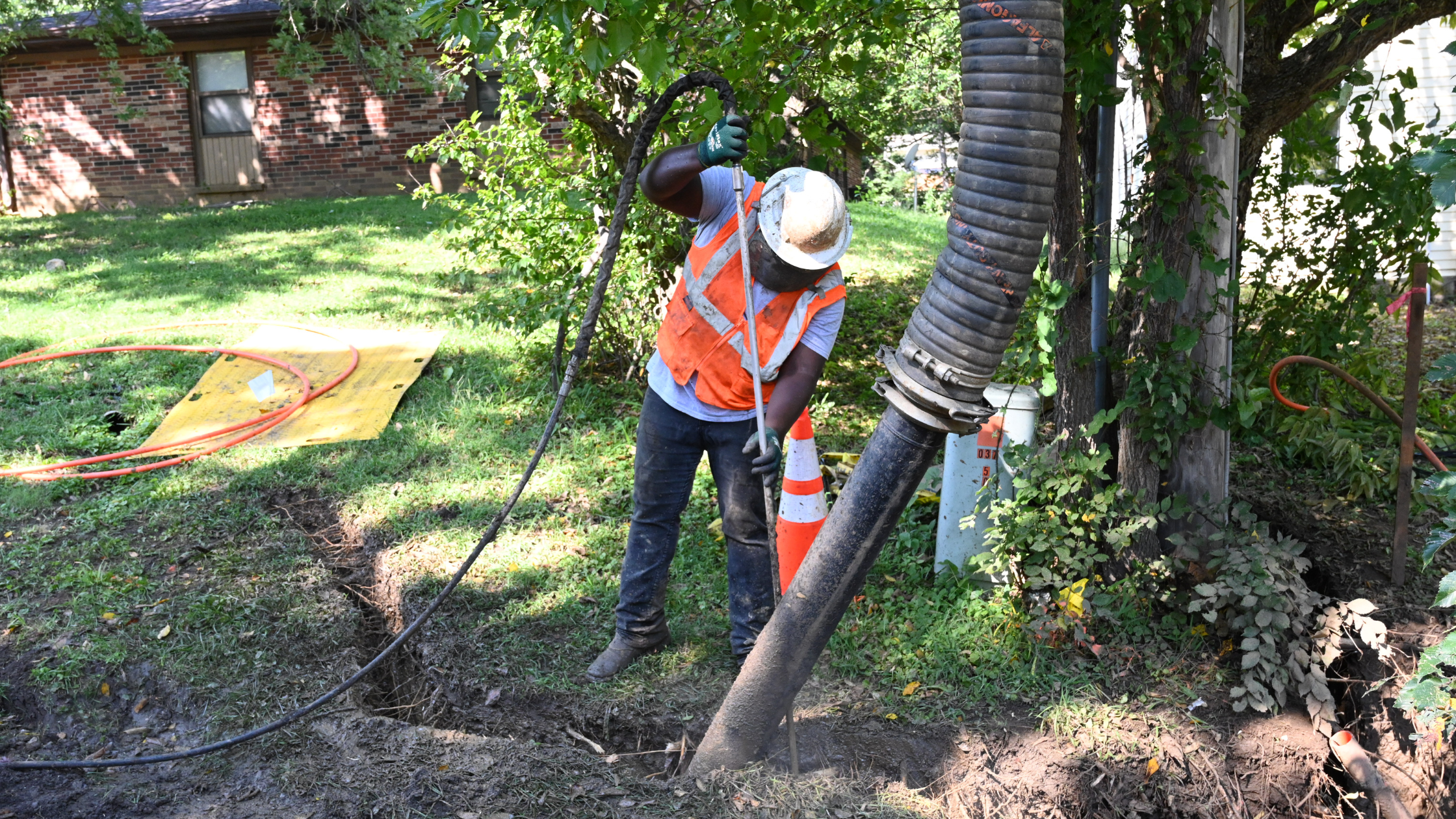
Depending on the site and scope, safe excavation practices may also require a more controlled way to expose or work around existing underground infrastructure. Vac services can support utility projects when crews need greater precision around sensitive or congested areas.
Why Public Safety Affects Client Trust
A utility project is highly visible when it is happening outside someone’s home, along a daily commute, or near the entrance to a business.
Members of the public may never see the planning, engineering, or coordination that happened before construction. What they can see is how crews carry themselves in the field.
They notice whether the work area appears organized. They notice how equipment is positioned, whether access is being considered, and how crews respond when someone has a question or concern. Those observations shape how the entire project is perceived.
Professional field conduct cannot eliminate every inconvenience associated with construction. Some disruption may be unavoidable. However, a clean, organized, and safety-conscious presence can show the community that the work is being handled with care.
The opposite can also be true. A confusing work zone, poor communication, or a lack of visible awareness can lead to complaints and concerns. Those issues can consume project time, create avoidable delays, and affect the reputation of both the contractor and the client.
For municipalities and utility providers, choosing a contractor is therefore not only a question of production. It is also a question of representation. The contractor becomes a visible extension of the organization behind the project.
Safety, Quality, and Communication Work Together
Safety is sometimes discussed as though it is separate from production, quality, or scheduling. In practice, these parts of a project affect one another.
A crew that understands the site and communicates clearly is better equipped to make sound decisions. An organized work area can reduce confusion and support more deliberate execution. Identifying an unexpected condition early can prevent damage, rework, or a larger interruption later.
This connection is especially important during broadband construction safety planning. Broadband projects often pass through areas where the underground environment is already crowded. Crews must work around existing utilities while navigating roads, easements, neighborhoods, and other active public spaces.
Rushing through uncertainty does not create reliable progress. It shifts risk further into the project.
By contrast, safety-first execution supports:
- Clearer decisions in the field
- Faster communication when conditions change
- Better protection of existing infrastructure
- More organized work areas
- Reduced potential for preventable rework
- Greater schedule stability
- A more professional experience for the surrounding community
A project may still encounter difficult conditions. The difference is how prepared the team is to recognize, communicate, and respond to them.
Public-Facing Work Requires Professionalism
Infrastructure construction is necessary work, but it often happens in places where the public is already living, driving, working, and conducting business.
Those environments require awareness, care, communication, and accountability from everyone involved. Crews must protect themselves and the people around them while respecting the active infrastructure, properties, and communities that share the work area.
For Sellenriek Construction, safety in a visible environment is connected to the broader responsibility of completing work professionally. It means recognizing that field decisions can affect the crew, the client, the public, and the long-term success of the project.
Safety is not only reflected in written infrastructure safety standards. It can also be seen in how work is planned, how changing conditions are communicated, how a job site is maintained, and how crews conduct themselves when the public is nearby.
That daily discipline helps protect people, support quality work, and build confidence in the project taking place.
Why is public safety important during utility construction?
Utility construction often takes place near roads, homes, businesses, sidewalks, and other active public areas. Public safety practices help protect people outside the crew while supporting access, minimizing avoidable disruption, and maintaining community confidence in the project.
How do contractors manage safety near roads and neighborhoods?
Safety begins with understanding the work area, known risks, site conditions, equipment needs, and access constraints. During construction, crews must remain aware of traffic, pedestrians, surrounding properties, active infrastructure, and changing field conditions. Specific measures depend on the project and its approved safety requirements.
What should clients expect from crews working in public spaces?
Clients should expect crews to approach the site with awareness, organization, clear communication, and professional conduct. Work areas should be managed with consideration for the crew, the public, surrounding properties, and existing infrastructure.
What is right-of-way construction?
Right-of-way construction is work performed within designated corridors commonly used for roads, utilities, sidewalks, and other public infrastructure. These areas can be active and constrained, requiring crews to account for traffic, public access, existing facilities, and surrounding properties.
Why does jobsite organization matter?
An organized job site helps crews maintain awareness, communicate more clearly, and work efficiently within the available space. It can also make the work zone more understandable to the public and reduce unnecessary confusion around equipment, tools, and materials.
How does safety affect construction quality?
Safety-conscious planning and execution encourage crews to understand conditions, communicate changes, and make deliberate decisions. These habits also support quality by helping teams protect existing infrastructure, identify conflicts early, and reduce the potential for damage or rework.